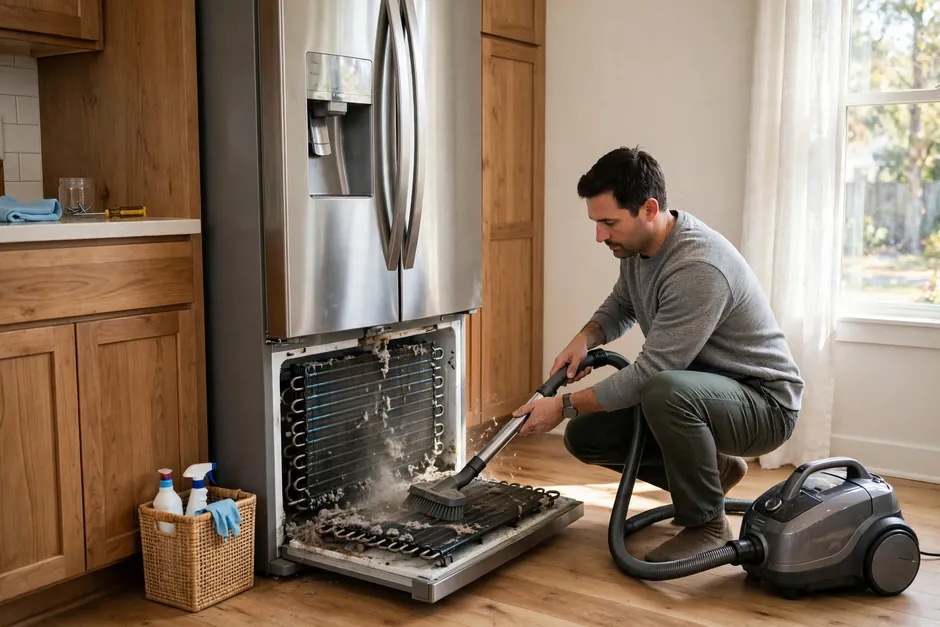
Clean your refrigerator's condenser coils about once a year, and every six months if you have shedding pets, a garage fridge, or a built-in with top-mount coils. Dirty coils cannot shed heat, so the compressor runs longer and hotter, cooling suffers in summer, and the system's working life shortens. It is the cheapest life-extension a refrigerator ever gets.
What the coils do, and what dust does to them
The condenser coils dump the heat your fridge removes from its interior. On most models they sit underneath behind a kick plate or on the back; built-ins hide them above the unit behind a grille. A blanket of dust and pet hair insulates them exactly like a sweater, and the compressor pays for it in run time and heat.
In Thompson's Station the load is heavier than average: summer heat, open-window pollen season, and the fine dust of a growing town with construction always somewhere nearby. Garage fridges in Avenue Downs and Emberly breathe the worst of it, which is part of why they die younger than kitchen units.
The safe cleaning routine
Unplug the fridge, or switch it off at the breaker. Remove the kick plate or rear cover as your manual describes. Use a long coil brush to loosen the mat, then vacuum with a crevice tool; work gently, because coil fins and refrigerant lines do not forgive force. Vacuum the condenser fan area too, and clear the drip pan if yours is accessible.
Push the fridge back carefully without kinking the water line, restore power, and confirm the fan runs. That is the whole job for most models. Our maintenance visits include it, along with temperature checks and gasket inspection, for owners who would rather have the whole appliance list handled at once.
Signs you waited too long
The fridge runs almost constantly, the sides or center mullion feel hot, cooling slips on the hottest afternoons, or the compressor has grown louder. Those are strain symptoms. If a good coil cleaning and a day of recovery do not restore normal cycling, the strain may have become a fault, fans, relay, or worse, and our refrigerator repair page explains the testing path.
One honest caveat: coil cleaning is maintenance, not resurrection. A compressor already failing will not be saved by a brush. But thousands of fridges hum along 'fine but tired' for years purely because this ten-minute job keeps getting done.