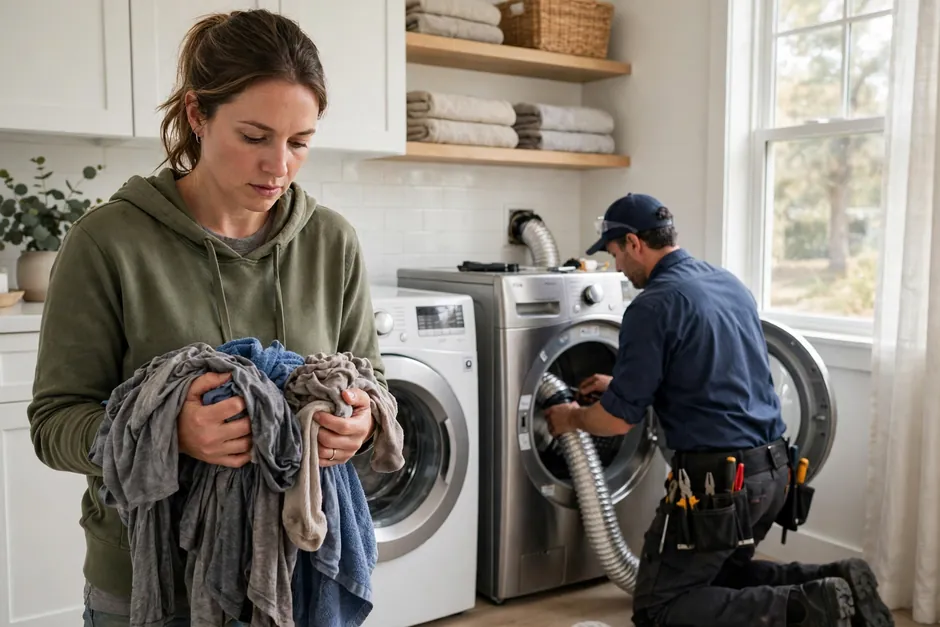
Most dryers that take too long are being strangled, not broken: a lint-restricted vent is the leading cause, followed by overloaded drums, a dirty moisture sensor, and only then heat-side faults like a cycling element or weak gas coils. The vent check comes first because it is the most common cause and the one that damages the dryer while you wait.
The vent, again, because it is usually the vent
A dryer is an air pump with a heater attached. Restrict the exhaust and moist air lingers in the drum no matter how hot the element runs. Feel the airflow at the outside hood during a cycle: a weak flow on a warm day is a confession. Thompson's Station's long and roof-vented runs in two-story subdivisions make this the default suspect, and our vent cleaning guide explains the cadence that prevents it.
Also check the boring killers: a kinked transition duct behind a machine pushed back hard, a lint trap screen filmed with dryer-sheet residue (scrub it with a brush and detergent; water should pass through), and an exterior hood painted or screened shut.
Load and sensor honesty
A drum packed past two-thirds cannot tumble clothes through the airstream, and mixed loads, one bath towel among delicates, defeat moisture sensors by design: the sensor reads the dry majority and ends the cycle with the towel still damp. Sensor bars also film over with fabric softener residue until they under-read moisture; a wipe with rubbing alcohol restores them, a trick worth knowing before any repair bill.
Sort loads by weight, leave tumble room, and if timed cycles dry fine while auto cycles quit early, you have isolated the sensor system in one experiment. That detail, told to us on the phone, shortens a visit measurably.
When it really is the dryer
If airflow outside is strong, loads are sane, and timed cycles also crawl, the heat side is at fault: an element cycling on a weak high-limit thermostat, gas valve coils that fade as they warm (first load fine, later loads endless), or a blower wheel slipping or packed with lint. Those are meter-and-inspection diagnoses on our dryer repair page, and they are all repairable parts.
One safety line: a dryer that takes long AND smells hot, scorches, or leaves the laundry room steamy should stop being used until checked. Slow drying is an efficiency complaint; slow drying with overheating is the fire-risk pattern, and that combination jumps the queue.