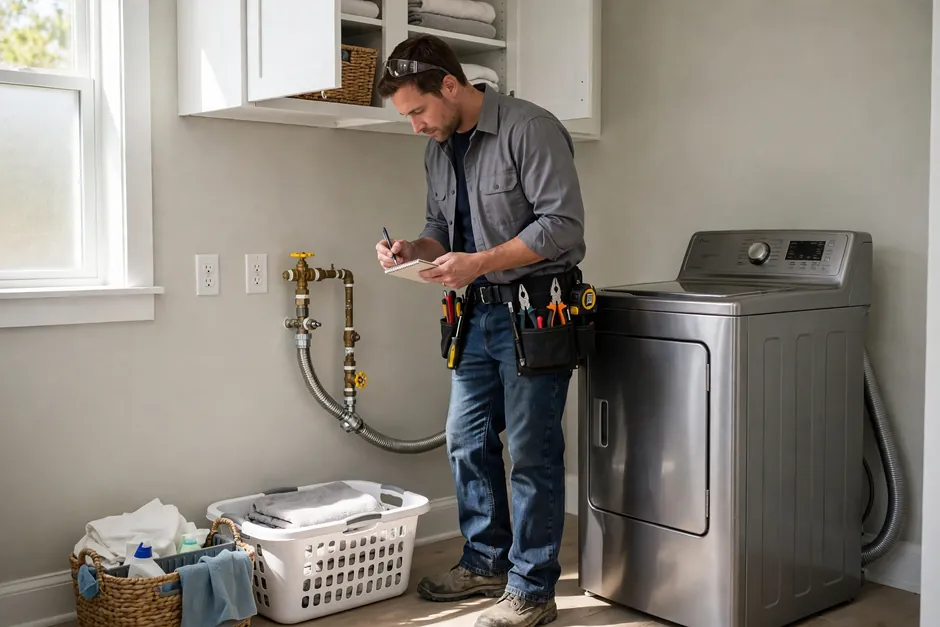
For most Thompson's Station homes, the hookups you already have should decide: a home plumbed for gas makes a gas dryer cheap to run per load, while an all-electric home avoids a gas line installation entirely. Gas dryers typically cost less per load and dry a bit faster; electric dryers are simpler, cheaper to buy, and easier to place. Neither is the wrong answer.
The cost picture, without the hype
Gas dryers usually carry a higher purchase price and need a gas connection plus the same venting as electric. Per load, gas typically costs less where natural gas is available, as it is across most of Thompson's Station, while electricity rates decide the electric side. Over a dryer's roughly 13 to 14 year life, heavy laundry households feel the per-load difference; light households may never repay the gas line if one must be added.
Both types use electricity for the drum and controls; gas replaces only the heat source. And both need exactly the same vent discipline: our vent cleaning guide applies word for word to either.
Living with each type
Gas dryers heat up fast and can be gentler on clothes at the same dryness, and they recover quickly between back-to-back loads, a real plus in the big laundry rooms of Canterbury and Bridgemore Village. Electric dryers ask less of the house: a 240-volt outlet and a vent, no gas valve, no combustion, simpler placement in interior laundry closets.
Repairs differ by system. Electric heat faults are elements, fuses, and thermostats. Gas heat faults are igniters, flame sensors, and valve coils, and gas smells end the DIY conversation, as our dryer repair page details. Both are routine for a technician; gas simply has a stricter safety line for owners.
So which one for your house?
If a capped gas line already sits behind your laundry space, gas is the economical default and worth the modest price premium. If adding a line means a plumber, permits, and a long run, electric's simplicity usually wins the lifetime math for an average-size household. Renting or managing? Electric reduces tenant variables, one reason our property manager clients lean that way.
Whichever you choose, spend the savings argument's leftovers on the vent: proper rigid duct, the shortest run, and a cleaning rhythm. Vent quality moves dry times and safety more than fuel choice ever will.