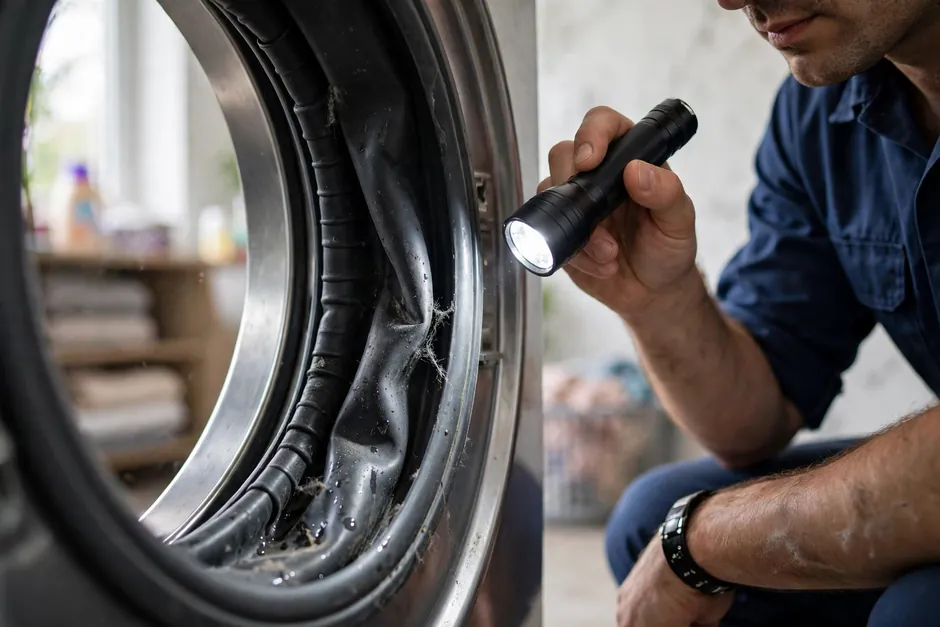
A smelly washer is growing biofilm where water and detergent residue sit: inside the front-loader's door gasket folds, in the sump and pump filter area, and in the detergent drawer. The drum itself is rarely the source. Fixing it means physically cleaning those places, correcting detergent overdosing (the most common cause), and changing the moisture habits that feed it, especially in humid Middle Tennessee laundry rooms.
Where the smell actually lives
Pull back the door gasket folds on a front-loader and look: the gray-black film in the creases is the smell's headquarters, fed by every load's soil and detergent and never fully rinsed. Top-loaders keep their funk in the tub ring and under the agitator cap. Both types harbor the second source underneath: a pump filter and sump holding a slurry of lint, coins, and old water.
This is why tablet cleaners run in an empty drum disappoint. They wash the visible tub while the gasket folds and filter, the actual reservoirs, sit untouched. Owners across every appliance forum repeat the same cycle of buying stronger cleaners for a problem that is mechanical, not chemical.
The cleaning that works
Wipe the gasket folds thoroughly with a cloth and a mild bleach solution or the washer-safe cleaner of your choice, working into every crease, then dry them. Pull and clean the pump filter over a pan (see our washer not draining article for the water involved). Remove and scrub the detergent drawer. Then run the hottest empty cycle the machine offers. That sequence, once, resets the machine.
If the smell returns within weeks despite all that, suspect a drainage issue keeping dirty water in the sump, or a drain hose installed so sink water siphons back, both of which our washing machine repair visits check as a matter of course.
Keeping it gone: dose and air
The root cause in most homes is detergent overdose: modern high-efficiency machines need a tablespoon or two, and the excess coats everything downstream. Pods make overdosing automatic for small loads. Measure for your load size and Williamson County's water, and the biofilm's food supply dries up.
Then let the machine dry: door cracked open between loads, gasket wiped after the last load of the day, drawer left ajar. In our humidity, a sealed, wet washer is a terrarium. These three habits cost nothing and are the entire difference between a washer that smells at year eight and one that never does.